The best AI platform for education use cases
The same app → agent pattern, organised across departments with buckets and grounded in your own course and policy content.
A school or training organisation rarely needs just one bot. Admissions questions, student IT support, and staff HR questions are three different audiences with three different knowledge bases — and Botmanor’s bucket-based organisation exists precisely for running several of them side by side under one governed workspace.
The blueprint per audience is the familiar one: an app as the front door, a domain specialist behind it, an escalation agent for handoff to a staff member, and a knowledge base grounded in your own material.
The Campus Assistant blueprint
A blueprint is the shape we recommend for education, assembled from Botmanor primitives — not a pre-built template Botmanor installs for you. Botmanor does not ship a per-industry template catalogue; templates are workspace entities you create and can publish to the store.
The App → Agent mechanic, applied to a campus
One app as the front door, specialist agents behind it — a general-questions agent alongside a financial-aid or enrolment-specific agent — with an escalation agent for handoff to staff, and routing configuration wiring it together.
The knowledge base is where the content is genuinely yours: course catalogues, admissions policies, financial-aid guides, or student handbooks. Documents you upload are the shipped ingestion path: each is chunked with the strategy you pick, embedded into that knowledge base’s own vector collection, and tracked through its own processing status, so a failed document is visible instead of quietly missing. Site crawling and pull-based connectors are on the roadmap. Each corpus is chunked with the strategy you choose, embedded into its own vector collection, and validated with semantic search before anything goes live.
One workspace, several bots, organised properly
Bucket-based organisation groups related apps and agents hierarchically, agent versioning keeps configuration changes traceable, and workspace RBAC lets multiple staff collaborate on the same bots under role-based permissions — so an admissions office and an IT department can each own their bot without stepping on each other.
Each app can deploy across different channels for different audiences: channel connectors and routes cover Slack and Microsoft Teams for staff-facing bots, plus Discord, WhatsApp, and inbound webhooks. The embeddable web chat widget for a public prospectus site is modelled but not yet shipped.
Grounded in your own materials, tunable per corpus
Retrieval settings are configurable per knowledge base — mode, chunk size and overlap, top-K, and score thresholds — and saved as a reusable retrieval profile you can attach to other agents or distribute through the store, so “the retrieval configuration that works for our admissions FAQs” becomes something you build once and reuse across programmes or campuses. Vector search is the implemented path today; hybrid and BM25 modes are stored configuration ahead of the runtime that consumes them.
One boundary, stated plainly: routing configuration, retrieval settings, MCP tool entries, and policy definitions are managed objects you author and version today — the agent runtime that dispatches on them inside a live conversation, grounds answers in retrieved chunks, calls tools, and hands off to a human is the next milestone. You build the governed layer first, on purpose.
Data handling you can explain to a board
Model selection is per agent and per provider across 11 provider types, including Azure OpenAI and a custom OpenAI-compatible endpoint pointed at a model server you host yourself, so an institution with data-residency requirements chooses where inference runs. Your knowledge bases and conversations are used to serve your agents, not to train foundation models — a distinction that matters when the content touches student records or enrolment data.
On Botmanor vs. building it from scratch
| Aspect | On Botmanor | From scratch |
|---|---|---|
| Starting point | App, agent, routing, and knowledge-base primitives in a workspace that already enforces RBAC and keeps an audit trail. | You build each app, its agents, and its permissions on a blank workspace with no reference pattern. |
| Running several bots | Bucket-based organisation groups related apps and agents by department or audience from day one. | You track which bot belongs to which department yourself, outside the platform. |
| Knowledge base | A managed corpus per audience with its own vector collection, index lifecycle, and semantic-search validation. | You build ingestion, embedding, and evaluation for each department before any agent can cite a policy. |
| Collaboration | Workspace RBAC lets multiple staff work on the same bots under role-based permissions, with every change audited. | You build or borrow a permissions model for shared editing yourself. |
Education FAQ
Related use cases

Knowledge & RAG
Knowledge bases with per-KB vector collections and semantic search
Develop RAG corpora with Botmanor. Embed documents into vector collections and validate with semantic search for effective knowledge retrieval.
Channels
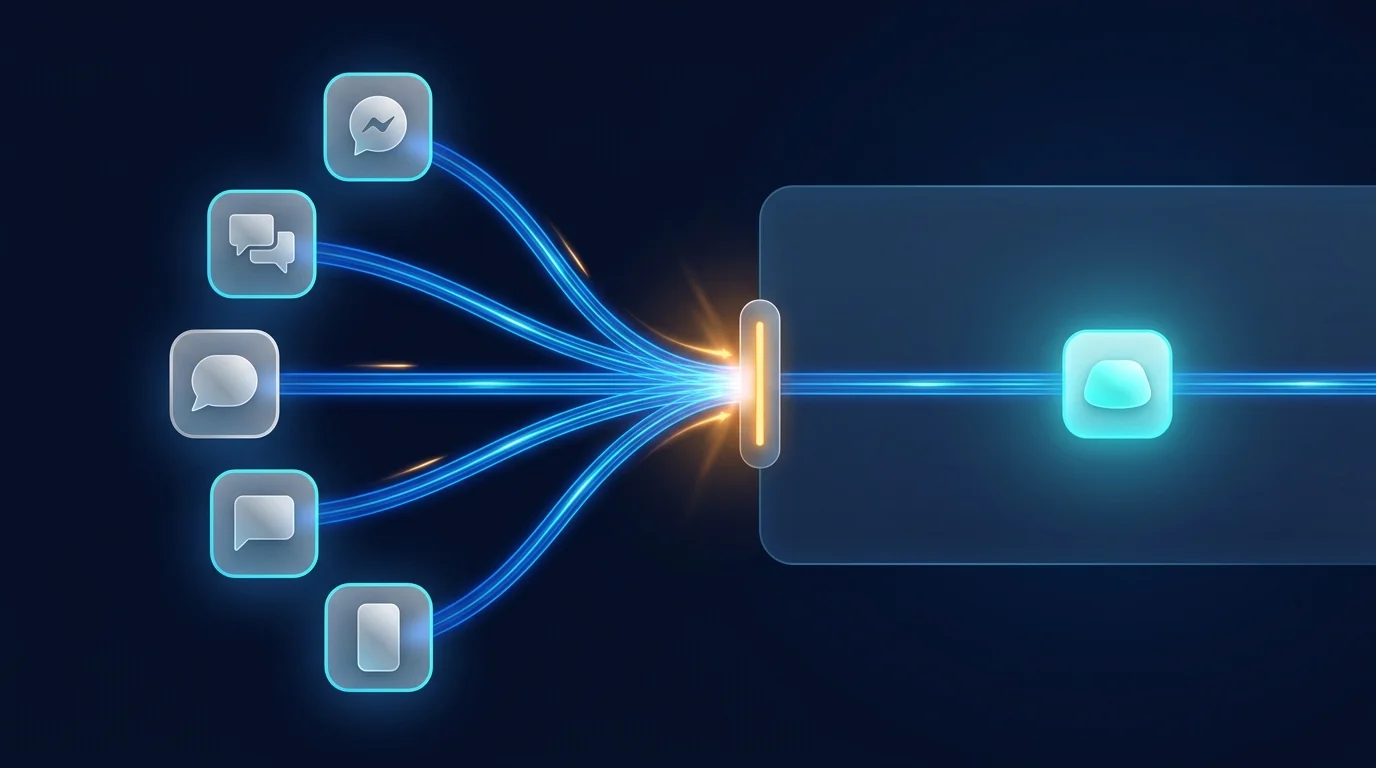
Deploy to Slack, Teams, Discord, and WhatsApp with webhook fan-in
Deploy bots to Slack, Teams, Discord, and WhatsApp. Use channel connectors and webhooks for seamless integration and background processing.
Operations
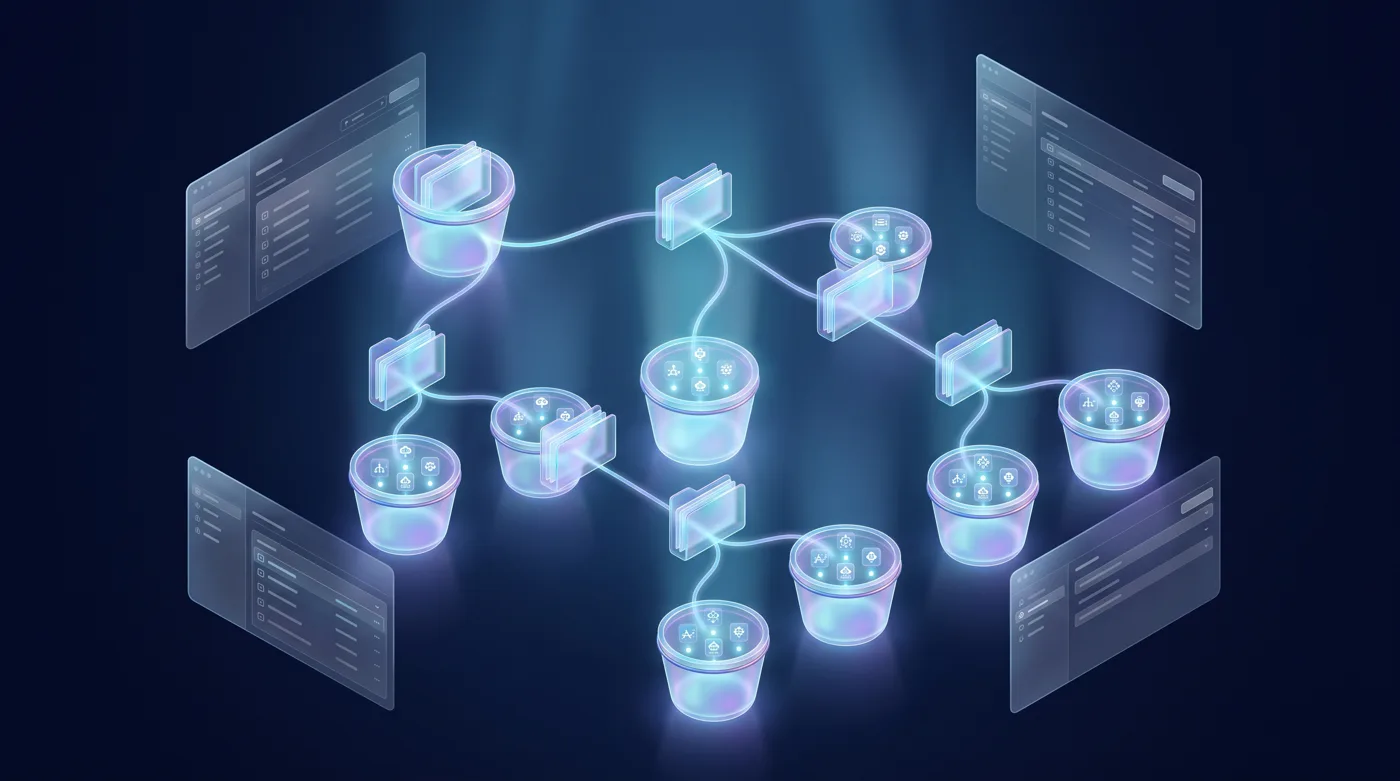
Organize Agents with Hierarchical Buckets | Botmanor Use Cases
Manage bot apps with hierarchical buckets. Keep workspaces navigable by organizing agents by team, client, or lifecycle stage.
See it running on your own education content
Join the waitlist and we will reach out as onboarding slots open.