The best AI platform for finance & legal use cases
The same app → agent pattern, backed by versioned prompt templates and policy definitions built for regulated content.
Finance and legal teams are the ones who read the governance page before the features page, so this one is written for that audience. The platform mechanics are the same as every other Botmanor workload — one app as the front door, specialist agents behind it, a validated knowledge base — but the governance layer is what makes it a serious option for regulated content specifically.
A useful shape here is a front-of-house agent for general enquiries, a domain specialist for contract terms or billing detail, and an escalation agent for anything that needs a qualified human. What follows is what is genuinely enforced today and what is not.
The Regulated Advisory Desk blueprint
A blueprint is the shape we recommend for finance & legal, assembled from Botmanor primitives — not a pre-built template Botmanor installs for you. Botmanor does not ship a per-industry template catalogue; templates are workspace entities you create and can publish to the store.
The App → Agent mechanic, applied to your domain
One user-facing app as the front door, one or more specialist agents behind it — a billing-questions agent alongside a contract-terms agent, say — plus an escalation agent for handoff to a person, with routing configuration wiring it together. Each agent is versioned with publish, changelog, and rollback, so “which instructions were live on the day that answer was given” is answerable.
The knowledge base is where finance and legal content genuinely differs: your contracts, policy documents, or regulatory guides, each chunked with a strategy you choose and embedded into its own vector collection, and validated with semantic search before anything goes live. Documents you upload are the shipped ingestion path: each is chunked with the strategy you pick, embedded into that knowledge base’s own vector collection, and tracked through its own processing status, so a failed document is visible instead of quietly missing. Site crawling and pull-based connectors are on the roadmap.
Governance built as managed objects, not prompt comments
For a regulated team the useful question is not just “can it answer” — it is “where are the rules written down”. Botmanor answers that with policy definitions across seven types: content, tool, data, response, budget, rate-limit, and retention, each with its own tool-risk levels, created, reviewed, and audited like any other managed object, and shareable as store packages. Policy definitions ship today. Enforcing them automatically in the live execution path is on the roadmap, and we state that boundary rather than implying otherwise.
Prompt templates bring the same discipline to instructions: a versionable, parameterised template with variable placeholders means your compliance-approved disclaimer lives in one place referenced everywhere, instead of being copy-pasted into every agent and drifting in each.
Data boundaries you control
Botmanor orchestrates the LLM providers you configure — your knowledge bases and conversations serve your agents, not foundation-model training. With 11 provider types you choose where inference runs, including Azure OpenAI for enterprise data boundaries or a custom OpenAI-compatible endpoint pointed at a model server you host yourself for content that must not leave your infrastructure — a meaningful lever for material with jurisdictional or client-confidentiality constraints.
Underneath, the platform adds encryption at rest and TLS in transit, credentials held in managed secret stores and resolved at execution rather than written into an agent definition, and RBAC enforced on every operation governing who can see or change each app, agent, and knowledge base.
Connecting systems of record
Botmanor uses a generic integration framework: register a provider under a category with OAuth2, API-key, or basic auth, and the platform vaults the credential. Webhooks, the API-first surface, and the MCP registry cover everything else. There is no catalogue of pre-built named connectors to specific finance or legal systems today — that is roadmap, and we would rather you learn it here than in an implementation call.
On Botmanor vs. building it from scratch
| Aspect | On Botmanor | From scratch |
|---|---|---|
| Starting point | App, agent, routing, and knowledge-base primitives in a workspace that already enforces RBAC and keeps an audit trail. | You build the app, agents, and governance model on a blank workspace with no reference pattern. |
| Governance | Policy definitions across seven guardrail types, versioned prompt templates, and a full audit trail — ready to review before launch. Runtime enforcement is roadmap. | You design a guardrail model and a review process from nothing. |
| Data boundaries | Choose Azure OpenAI, or a custom OpenAI-compatible endpoint pointed at your own model server, to keep inference inside your infrastructure. | You build or evaluate a bring-your-own-model layer yourself. |
| Credential handling | Provider keys vaulted through the platform integrations service and resolved at execution — never stored in an agent definition. | Keys sit in environment variables or config files with no per-workspace scoping. |
Finance & Legal FAQ
Related use cases
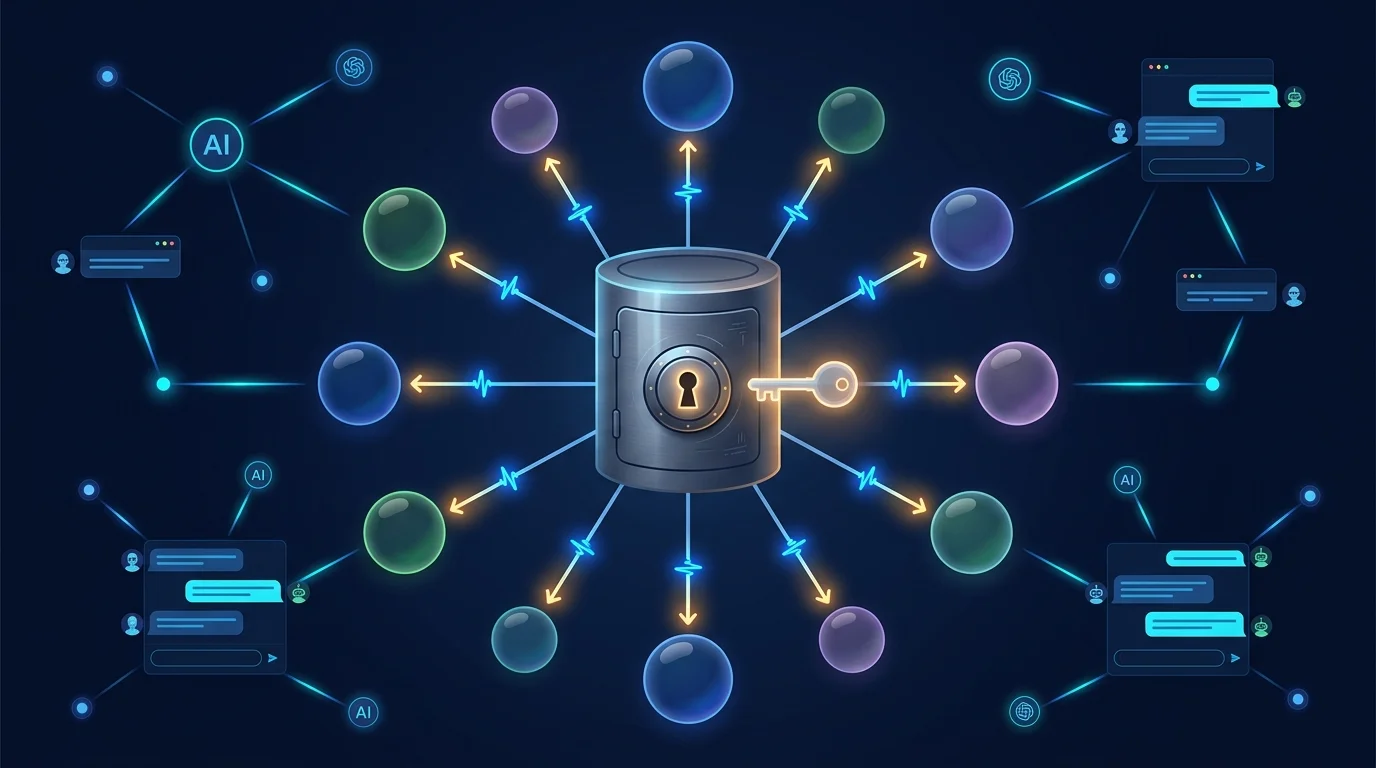
Models & Providers
Bring your own model: 11 provider types with vaulted keys
Register the LLM providers your organisation has sanctioned — OpenAI, Anthropic, Google, Cohere, Mistral, Groq, Together, HuggingFace, Azure OpenAI, AWS Bedrock, and custom OpenAI-compatible endpoints — with vaulted credentials, connection tests, and per-model parameters.

Governance & Security
Governance with Policies and Prompts | Botmanor Use Cases
Define governance with policies, skills, and templates. Ensure compliance with auditable and shareable governance packages.
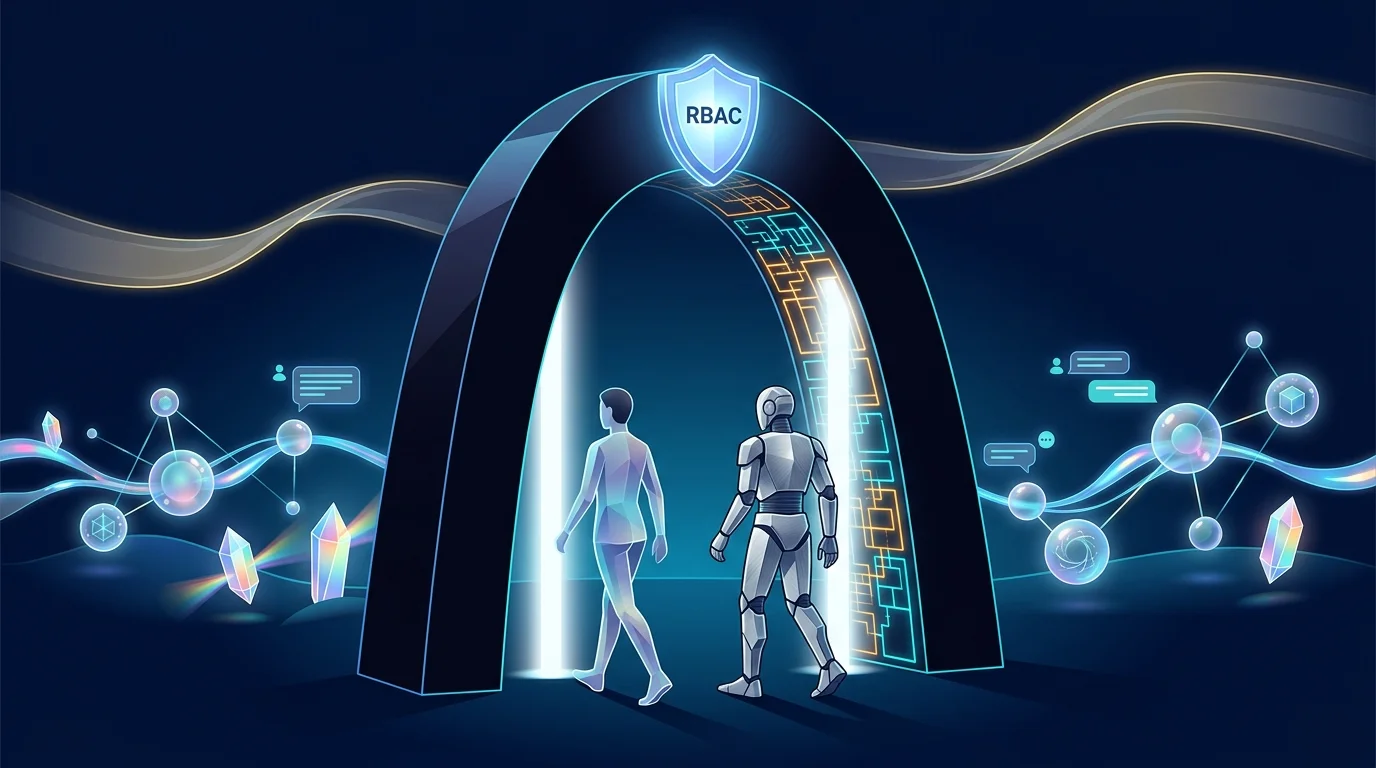
Governance & Security
RBAC and Credential Management for APIs | Botmanor Use Cases
Botmanor inherits the Burdenoff platform’s identity-based security model: every query and mutation is gated by an RBAC rule enforced on every request, workspaces isolate tenants, and machine credentials give pipelines governed access.
See it running on your own finance & legal content
Join the waitlist and we will reach out as onboarding slots open.