The best AI platform for sales use cases
A Lead Qualification Agent and a Scheduling Agent behind one app — so inbound interest gets a fast, consistent first response.
The sales blueprint applies the same App → Agent architecture as every other Botmanor workload — one app your prospects talk to, with specialist agents behind it — tuned for the first minutes of an inbound lead’s attention, before an SDR is even in the loop.
Two agents: a Lead Qualification Agent and a Scheduling Agent, with routing configuration between them and a knowledge base you fill with your own product and pricing content.
The Sales Qualifier blueprint
A blueprint is the shape we recommend for sales & marketing, assembled from Botmanor primitives — not a pre-built template Botmanor installs for you. Botmanor does not ship a per-industry template catalogue; templates are workspace entities you create and can publish to the store.
What the Sales Qualifier blueprint looks like
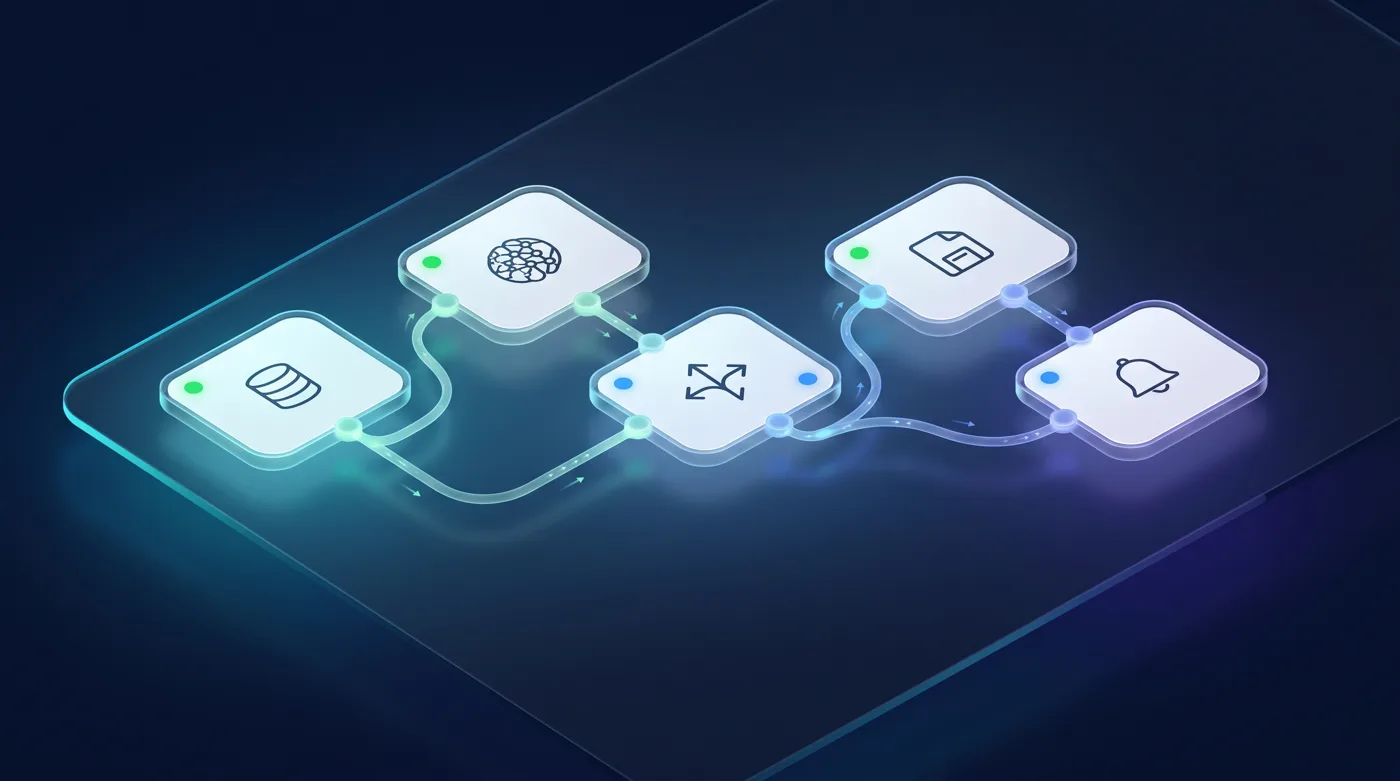
One app backed by two specialist agents — Lead Qualification and Scheduling — with a knowledge base holding your product overview, pricing pages, and objection-handling notes. That is enough to have a first, consistent conversation with an inbound prospect instead of leaving the form-fill to sit overnight.
The Lead Qualification Agent owns discovery: use case, timeline, and fit. The Scheduling Agent owns the transactional close. Keeping them separate is the point — one prompt trying to do both drifts, and you cannot version or cost them independently.
Two specialists, one conversation
You configure the qualification-to-scheduling hand-off as routing on the app→agent links, with the patterns that should trigger it. Because model selection is per agent, you can bind Lead Qualification to a stronger reasoning model for nuanced discovery and keep Scheduling on a lighter one for a more mechanical job — each binding published as a version you can roll back if it underperforms.
One boundary, stated plainly: routing configuration, retrieval settings, MCP tool entries, and policy definitions are managed objects you author and version today — the agent runtime that dispatches on them inside a live conversation, grounds answers in retrieved chunks, calls tools, and hands off to a human is the next milestone. You build the governed layer first, on purpose.
Where the conversation data lands
Every conversation, regardless of channel, lands in the shared team inbox with the execution record behind each agent turn — so a sales lead can see exactly what the qualification agent asked and what the prospect said before a human joins. That is oversight with receipts rather than a summary someone typed later.
For pushing that data onward, Botmanor uses a generic integration framework: register a CRM-category provider with OAuth2 or an API key and the platform vaults the credential, or use webhooks and the API-first surface. The MCP registry is where meeting-scheduling and CRM-write tools get catalogued, connection-tested, and risk-classified before any agent is allowed near them; invoking those tools inside a live conversation lands with the agent runtime upgrade.
Governed and measured like every other Botmanor app
A sales qualifier inherits RBAC enforced on every operation and an audit trail from the underlying workspace, and every execution records its tokens, cost, duration, and model — so “what does our qualification bot cost per lead” is a question you answer from the execution ledger rather than from a provider invoice a month later.
On Botmanor vs. building it from scratch
| Aspect | On Botmanor | From scratch |
|---|---|---|
| Getting to a working qualifier | App, agent, routing, and knowledge-base primitives in a workspace that already has RBAC, audit, and billing. | You build the platform layer before the first inbound lead is ever answered. |
| Specialist agents | Lead Qualification and Scheduling agents as separately versioned, separately costed entities. | One prompt does both jobs, and you cannot tell which half regressed or which half costs more. |
| Conversation visibility | A shared team inbox with the execution record behind every agent turn, from the first conversation. | You build transcript storage and an execution ledger before anyone can audit a call. |
| Routing configuration | The qualification-to-scheduling hand-off stored as reviewable configuration on the app→agent links. | Hand-off logic lives in code, and changing it is a deploy. |
| Cost visibility | Per-execution token, cost, duration, and model records from the first conversation onward. | You instrument cost tracking yourself before you can answer “what does this cost per lead”. |
Sales & Marketing FAQ
Related use cases

Getting Started
Install Agent Packages from Store | Botmanor Use Cases
Skip the blank page: install app and agent packages from the Botmanor store across ten package kinds, either linked (tracking upstream updates) or forked (a copy you fully own) — and fork later if a linked install needs client-specific changes.
Build Agents
Visual Workflow Automation with Botmanor | Botmanor Use Cases
Compose multi-step automations with the FluidGrids visual workflow builder embedded directly in Botmanor — the same engine used across the Burdenoff platform — then run them and inspect each step, with credential adapters that can hand your LLM keys to agent steps.

Operations
Know what every agent costs to run
Gain visibility into agent costs. Use execution metrics to inform pricing, budgeting, and model selection for AI workloads.
See it running on your own sales & marketing content
Join the waitlist and we will reach out as onboarding slots open.