One agent that does everything is a prompt too long to maintain. The durable pattern is specialists — a research agent, a billing agent, a synthesis agent — that hand work to each other. Botmanor builds this on the open A2A (Agent-to-Agent) protocol rather than a proprietary scheme.
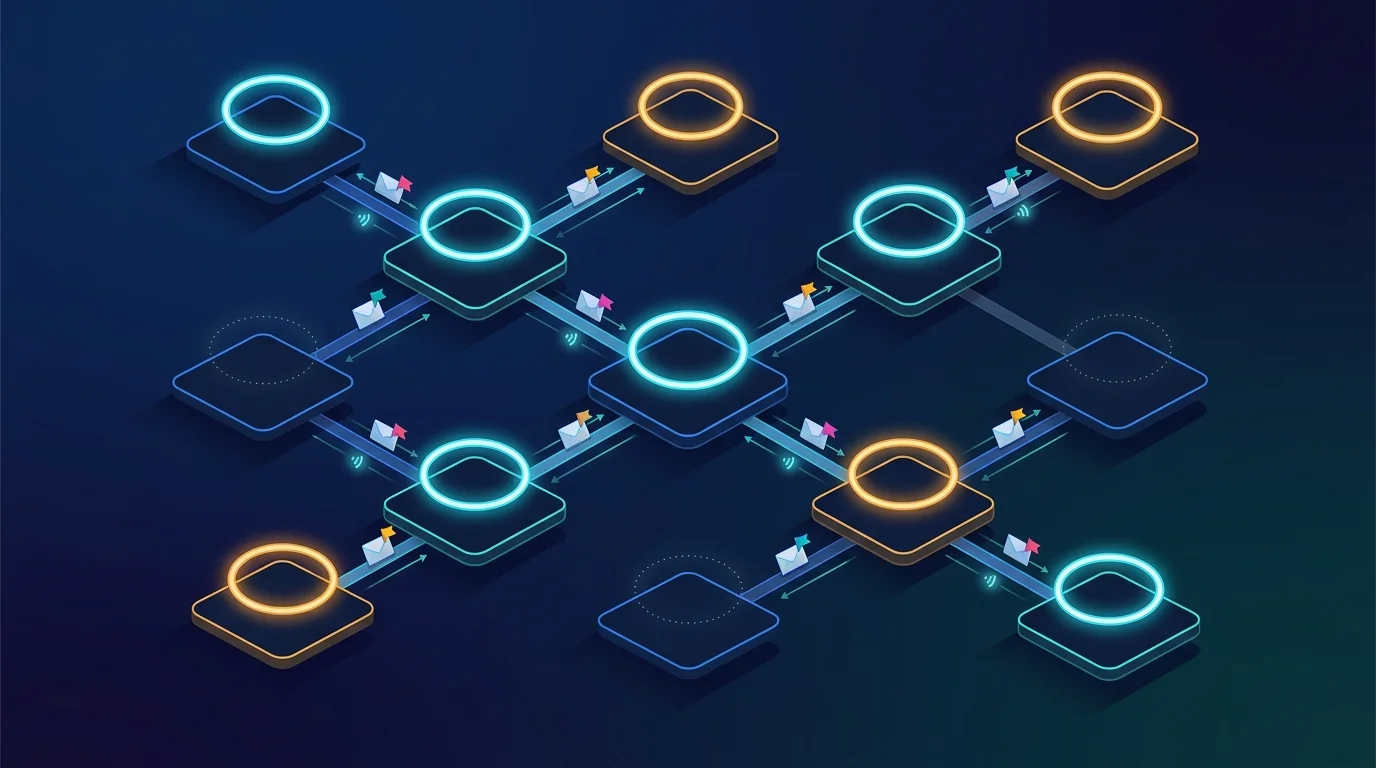
The A2A registry is the workspace's directory of known agents, each carrying a trust level: unverified, verified publisher, or internal. Trust is the gating concept — an architecture where your internal billing agent accepts tasks from an unverified external agent should be impossible to express by accident, and the registry makes the distinction explicit.
Connections declare which agents may talk to which. Messages between them are structured: they carry priorities, can be acknowledged, and track delivery status. This is the difference between "agents that call each other" and an auditable collaboration fabric — every hand-off is a record, not a hidden function call.
On honesty: this is the protocol and data layer. Live cross-agent delegation inside production conversations is on the runtime roadmap; Botmanor's reference agent stack already proves the A2A interop end-to-end across two different agent frameworks (Google's ADK and Agno), which is exactly the cross-framework promise of the protocol.
Architects use the registry today to design and document the agent topology — who exists, who is trusted, who connects to whom — so that when delegation goes live in the runtime, the org chart for your agent workforce is already drawn.
Do it yourself
Design the topology for a multi-agent system on the open Agent-to-Agent protocol: register known agents with trust levels, connect them, and send structured, acknowledged messages — the org chart your runtime delegation will follow.
From the Botmanor sidebar open A2A Registry to see your workspace’s directory of known agents.
You should see: The registry loads with the agents you have catalogued and a button to register more.
Ready to make this your story?