The best AI platform for HR use cases
An Onboarding Agent, a Benefits Agent, and a Payroll Agent behind one app — so the same three questions stop landing in your HR inbox every week.
HR and people operations follow the same App → Agent shape as every other Botmanor workload: one employee-facing app, with specialist agents behind it that each own a slice of the question load.
The blueprint is an Onboarding Agent, a Benefits Agent, and a Payroll Agent, with routing configuration between them and a knowledge base you populate with your own handbook, benefits guide, and payroll policies — the same repetitive questions your team answers by hand today, minus the wait.
The HR Assistant blueprint
A blueprint is the shape we recommend for hr & people operations, assembled from Botmanor primitives — not a pre-built template Botmanor installs for you. Botmanor does not ship a per-industry template catalogue; templates are workspace entities you create and can publish to the store.
What the HR Assistant blueprint looks like
One app backed by three specialist agents — Onboarding, Benefits, and Payroll — each with its own system prompt, model binding, and skills, plus a knowledge base you fill with your actual employee handbook, benefits summary plan descriptions, and payroll FAQs. Tone and branding are yours to set; the platform does not impose a voice on your People team.
Once you have a shape that works, save it as a template or publish it to the store as a package, and other teams in your organisation can install it linked or forked rather than rebuilding it from a screenshot.
Connecting the systems you already run
Botmanor uses a generic integration framework rather than a catalogue of pre-built named connectors. You register a provider under a category — CRM, communication, productivity, cloud storage, development, calendar, email, payment, analytics, accounting, or custom — with OAuth2, API-key, or basic auth, and the platform vaults the credential so services resolve it at execution instead of holding it. Inbound webhooks, an API-first surface, and the MCP registry cover the rest.
What that means practically for HR: your handbook, benefits guide, and payroll FAQs go into the knowledge base as documents today. Named, ready-made connectors to specific HRIS products are on the roadmap — tell us which ones matter to you on the waitlist and we will prioritise accordingly.
Routing that matches the question to the right specialist
You configure which agent should own which topic: parental-leave phrasing pointing at the Benefits Agent, first-day-laptop phrasing at the Onboarding Agent, “talk to HR” and “escalate” at your handoff path. Priorities, intent patterns, trigger keywords, and a fallback agent are stored on each app→agent link and versioned with everything else.
Each agent can be bound to a different model, so a stronger reasoning model sits behind Payroll — where precision matters most — and a lighter one behind routine onboarding questions, with every model change published as a version you can roll back.
One boundary, stated plainly: routing configuration, retrieval settings, MCP tool entries, and policy definitions are managed objects you author and version today — the agent runtime that dispatches on them inside a live conversation, grounds answers in retrieved chunks, calls tools, and hands off to a human is the next milestone. You build the governed layer first, on purpose.
Governed like the rest of the workspace
Because an HR assistant is a Botmanor app inside Burdenoff Workspaces, it inherits RBAC enforced on every operation, an audit trail over configuration changes, and per-execution records — so People-team leadership can see which agent version answered what, on which model, at what cost, without a separate reporting system. Channel connectors carry the same app to Slack or Microsoft Teams, wherever employees already ask HR questions.
On Botmanor vs. building it from scratch
| Aspect | On Botmanor | From scratch |
|---|---|---|
| Getting to a working assistant | A governed workspace plus app, agent, and knowledge-base primitives — and a documented three-agent shape to follow. | You build tenancy, permissions, and an agent model before the first employee question gets answered. |
| Specialist agents | Onboarding, Benefits, and Payroll agents as versioned entities with publish, changelog, and rollback. | You edit prompts in place with no version history, so a regression is hard to even identify. |
| Credential handling | Providers registered per workspace with credentials vaulted through the platform integrations service and resolved at execution. | API keys end up in environment variables, config files, or the agent definition itself. |
| Routing configuration | Priorities, intent patterns, trigger keywords, and fallbacks stored on the app→agent link and reviewed like code. | Routing logic lives in application code that HR cannot read, let alone change. |
| Knowledge base | Per-KB vector collections, an explicit index lifecycle, and semantic search to prove retrieval quality before launch. | You assemble ingestion, embedding, and evaluation yourself before any agent can cite the handbook. |
HR & People Operations FAQ
Related use cases

Getting Started
Install Agent Packages from Store | Botmanor Use Cases
Skip the blank page: install app and agent packages from the Botmanor store across ten package kinds, either linked (tracking upstream updates) or forked (a copy you fully own) — and fork later if a linked install needs client-specific changes.

Knowledge & RAG
Knowledge bases with per-KB vector collections and semantic search
Develop RAG corpora with Botmanor. Embed documents into vector collections and validate with semantic search for effective knowledge retrieval.
Models & Providers
Bring your own model: 11 provider types with vaulted keys
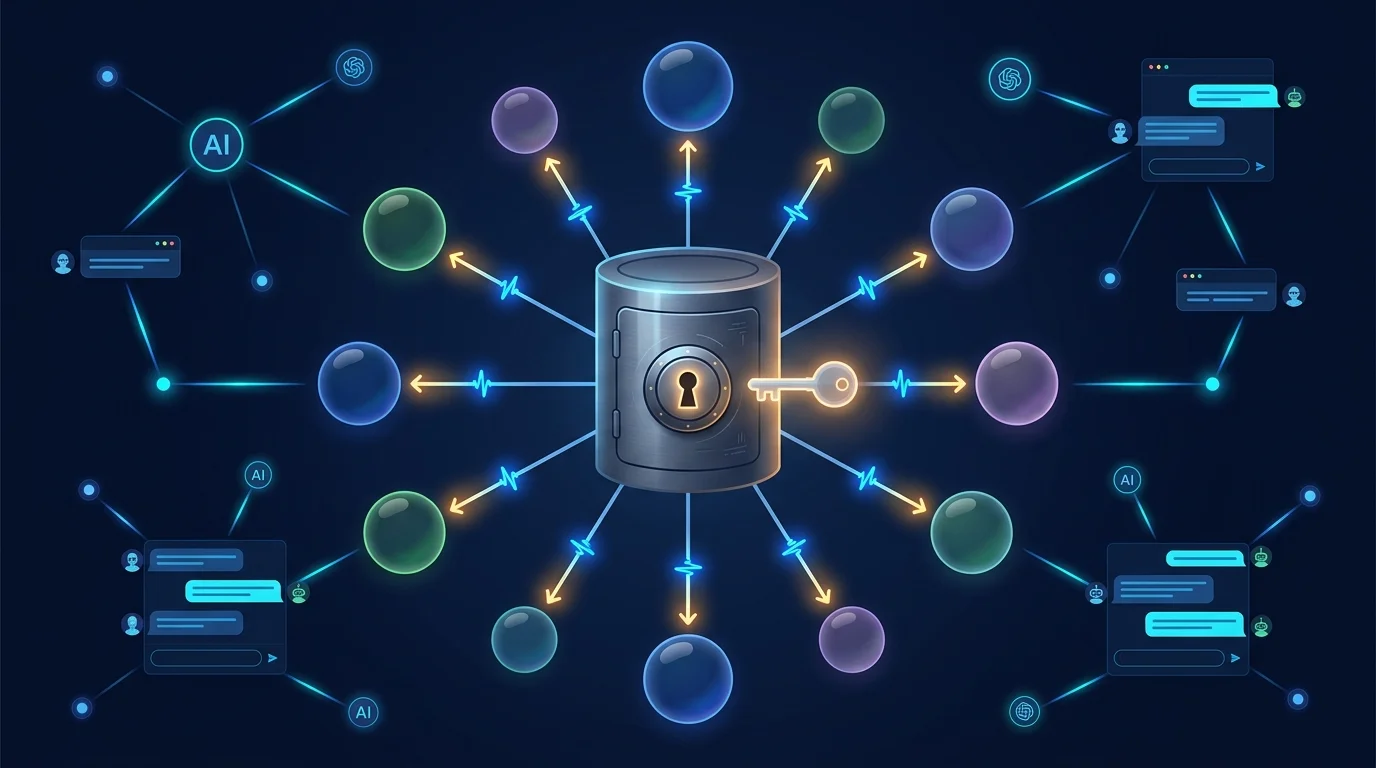
Register the LLM providers your organisation has sanctioned — OpenAI, Anthropic, Google, Cohere, Mistral, Groq, Together, HuggingFace, Azure OpenAI, AWS Bedrock, and custom OpenAI-compatible endpoints — with vaulted credentials, connection tests, and per-model parameters.
See it running on your own hr & people operations content
Join the waitlist and we will reach out as onboarding slots open.